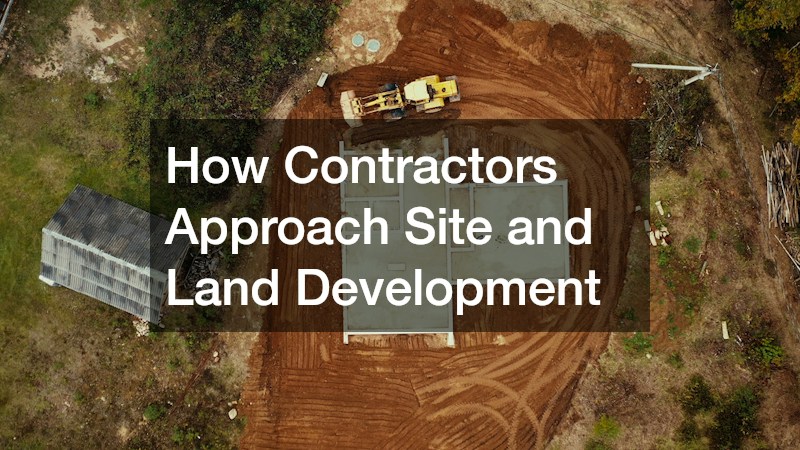

Preparing a property for construction involves much more than choosing a building design. Before foundations, walls, driveways, or other improvements can be installed, the land itself may need to be evaluated, cleared, graded, and prepared for safe and efficient construction. Contractors approach site and land development by considering the property’s existing conditions, the project’s goals, local requirements, drainage needs, and the work required to create a suitable building site. A well-planned approach can help identify potential challenges before construction begins.
It also allows contractors to coordinate different stages of the project so that excavation, grading, utility preparation, and other site work are completed in the appropriate order.
Evaluating Existing Property Conditions
The first step is understanding what is already present on the property. Contractors may evaluate the terrain, soil conditions, vegetation, existing structures, drainage patterns, access points, and other physical characteristics. The property’s slope and elevation can influence how much excavation or fill material is needed before construction can proceed. Existing conditions can also reveal potential obstacles. Trees, old structures, buried materials, uneven ground, or areas prone to standing water may require additional planning. Identifying these concerns early gives contractors an opportunity to account for them when developing the project schedule and determining the equipment, materials, and labor that may be required. Access is another important consideration. Construction equipment needs a practical route onto and around the property. Contractors may need to plan temporary access points, equipment staging areas, and material delivery routes to keep work moving efficiently.
Planning Grading, Drainage, and Excavation
Once the property has been evaluated, contractors can determine how the land needs to be shaped for the planned improvements. Grading involves adjusting elevations so that the property provides an appropriate surface for construction while directing water away from areas where it could cause problems. Drainage planning is particularly important because uncontrolled water can affect soil stability, foundations, driveways, landscaping, and other improvements. Contractors may consider the property’s natural drainage patterns and determine whether grading, drainage systems, or other measures are necessary to manage runoff. Excavation is another major part of preparing a property. Depending on the project, excavation may be needed for foundations, utility lines, drainage features, roads, or other improvements. Contractors coordinate excavation with the overall construction plan to avoid unnecessary disruption and ensure that the prepared areas are ready when subsequent crews need them.
Coordinating Equipment, Materials, and Crews
Successful site work requires careful coordination. Contractors may use excavators, loaders, bulldozers, compactors, and other heavy equipment depending on the property’s conditions and the scope of work. Choosing the appropriate equipment can help crews complete tasks efficiently while minimizing unnecessary disturbance to the surrounding property. Material management is also important. Projects may require fill dirt, aggregate, soil, gravel, or other materials to create stable surfaces or achieve planned elevations. Contractors need to determine what materials are required, where they should be placed, and whether material from excavation can be reused elsewhere on the property. Scheduling different crews is another consideration. Site preparation may involve excavation operators, grading crews, utility contractors, surveyors, and other professionals. Completing each stage in the proper sequence helps prevent one crew from interfering with another and can reduce delays as the project progresses. Communication plays an important role throughout this process. Contractors may coordinate with property owners, engineers, architects, utility providers, and other project professionals to keep everyone informed about site conditions and upcoming work.
Addressing Safety and Project Requirements
Safety is a central consideration throughout site preparation. Heavy equipment, uneven terrain, excavation areas, moving materials, and changing ground conditions can create hazards if work is not properly planned. Contractors establish work areas, consider equipment movement, and follow applicable safety requirements throughout the project. Permits and local requirements may also affect how work is performed. Depending on the location and scope of the project, property owners may need approvals related to grading, drainage, erosion control, utilities, access, or other site improvements. Contractors can account for these requirements when planning the work and coordinating the necessary steps. Environmental considerations may also influence the project. Controlling erosion, protecting designated areas, managing runoff, and handling removed materials appropriately can help reduce unnecessary impacts on surrounding land. A careful approach also includes monitoring conditions as work progresses. Actual soil or drainage conditions may differ from what was initially expected. Contractors can adjust their methods when unexpected conditions are uncovered, helping keep the project moving while maintaining the intended construction goals.
Contractors approach site and land development as a coordinated process that begins with understanding the property and continues through preparation for construction. Evaluating existing conditions, planning grading and drainage, coordinating equipment and crews, and addressing safety and project requirements are all important parts of the process. Taking time to prepare the property properly can create a more suitable foundation for the construction work that follows. By considering the land’s existing characteristics and the project’s long-term requirements, contractors can organize site preparation in a way that supports an efficient transition from undeveloped property to a construction-ready site.